A collection of worthwhile reads, and a few that aren't.
SF Worth Reading
Recent Additions
Review:
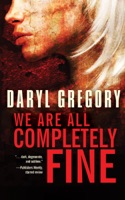
A support group forms for people living with the effects of horrific supernatural experiences. I didn't realize it when I started, but it's a sequel of sorts to "Harrison Squared," a YA novel Gregory wrote several years earlier. I don't think I'd call this YA though.
It's a superbly written short novel pretty squarely in the horror genre, half serial killer themed (not my thing at all) and half something otherworldly.

Review:
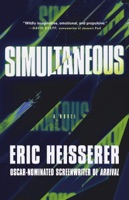
We follow the lives of a physicist, his wife and their friends for several years as the lab struggles to produce results with an experimental instrument, one that may reveal the nature of causality. It's not time travel. Don't call it that.
The central metaphor -- software version control -- could have been better explained in the book (it's a very brief bit of exposition, don't worry.) Nearly everything else about this novel is excellent. I think the version control concept could have been even more powerfully explored by digging a bit deeper on real versioning ideas ... but maybe
More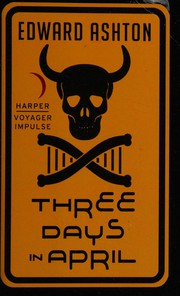
Review:
A humorous action filled novel about genetic engineering. Really hard to put down.
Review:
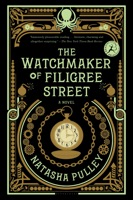
Set in 1880s England and Japan, it's a steampunk adjacent, semi-historical novel. There's no hero or villain, rather there are a couple of mysteries, perhaps scientific, perhaps supernatural. The characters, living through the 1880s aren't quite equipped to know the difference. Pocket watches play a large part.
Review:
The world ended two years ago. Surviving on a few lightly populated colony planets, humanity is trying to out-run the creatures that destroyed Earth. The setup and initial plot unfold at breakneck speed. That's something I've noticed more in British SF (as this is) compared to U.S. fiction. You can watch this at work in many Dr. Who episodes -- a lot happens with no time to catch your breath. Anyhow things settle down and it's definitely worth your time if you enjoy vaguely plausible space opera with elements of horror.
Review:
Written as the first in a series. In the very near future Julia Z -- a sort of hacker -- tries to locate a missing artist and ends up pulling on a thread that reaches into the darkest side of internet-enabled crime. It's a cross between a near future cyberpunk novel, crime thriller and mystery series genre. You'll have a better time if you read it as an entry in a series of well-researched crime thrillers. The style is rather direct and basic as mainstream thrillers tend to be. I found the mechanics of the artist's work questionable, but most
More
Review:
A librarian in a low tech steam powered far future devises a vast computer to administer her city-state and wage war on unfriendly neighboring states. But the real purpose of the machine is to guide weapons that can destroy the automated sunshade that is slowly freezing Earth into a new ice-age. Two thousand years in the future, electronics are not feasible to produce, -- space based monitors annihilate any EM devices they detect. There are so many new ideas colliding in this book; I've just given you the biggest ones. The "Great Machine" is a computer made up of all
More
Review:
A group of tourists travel together on the "Canterbury Trails" bus to visit "The Impossibles". Those are seven of the most impressive "reality glitches" located in the USA that appear after it's discovered we live in a simulation. There's a little about simulation theory and a lot of time on the characterization of each of the travelers. There's not enough space here to do this book justice. It's as good as anything I've read by Gregory. A little less mind-bending than some of his stuff and deeper characterization. I liked the ensemble cast -- would make for a truly good
More
Review:
Takes place in the same universe as Book of Doors. Some similar themes and characters.
Review:
A future expedition into newly uninhabitable regions of Earth due to global warming goes terribly wrong. Of course it does. It's an interesting part of the plot: It's understood that some areas of Earth will become so warm and humid (look up "wet bulb temperature,) that humans won't survive on the surface as global warming progresses. What would that really mean for life on Earth? There's a lot more to this book, principally the unreliable first-person narrator. A perfect novella length.
Review:
Follows the near future development of faster than light travel. But it's not the first time humans have invented it ... Set in future Scotland and near Earth space. There are some really ingenious settings and characters: The android who you're never sure is actually self aware. Oh he says he was very disturbed to learn he wasn't human but we're left in doubt. MacLeod very cleverly narrates his sections in such a way you can't figure him out, but it takes a while to catch on to what the author is up to. I feel like this book and
More
Review:
A sequenced set of stories about videographer Amber and a conspiracy theory radio show and pod-caster host Jack Owens. He's trying to make the jump to video. On the radio you can stick to talking about Big Foot. On video things get a lot more real. This is a pretty funny book. Every one of the loosely connected stories presents a different mystery: Is what they just saw really paranormal or is there a rational explanation?
Review:
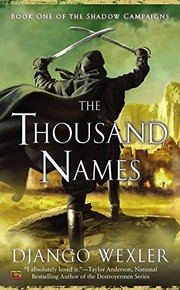
Alternate world military with a bit of magic, something like 18th Century France. Starts out slow, but picks up about a third of the way through and just gets better and better. This is the first book in the "Shadow Campaigns" series.
Review:
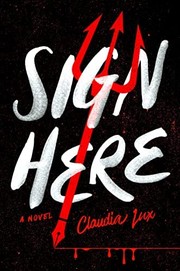
The book begins with a guy starting his day at the office in Hell. Yes, literal Hell. It's amusing and promises some adventures as the workers attempt to convince mortals to sign away their souls. Some hellish office politics take place. Then the story broadens to follow one family in danger of losing their last members to a Devil's bargain. Not the light comedy / supernatural thriller I expected, but still funny in parts and well written. Opinion on this one is quite mixed and I can see why. To really get the most out of it you need to
More